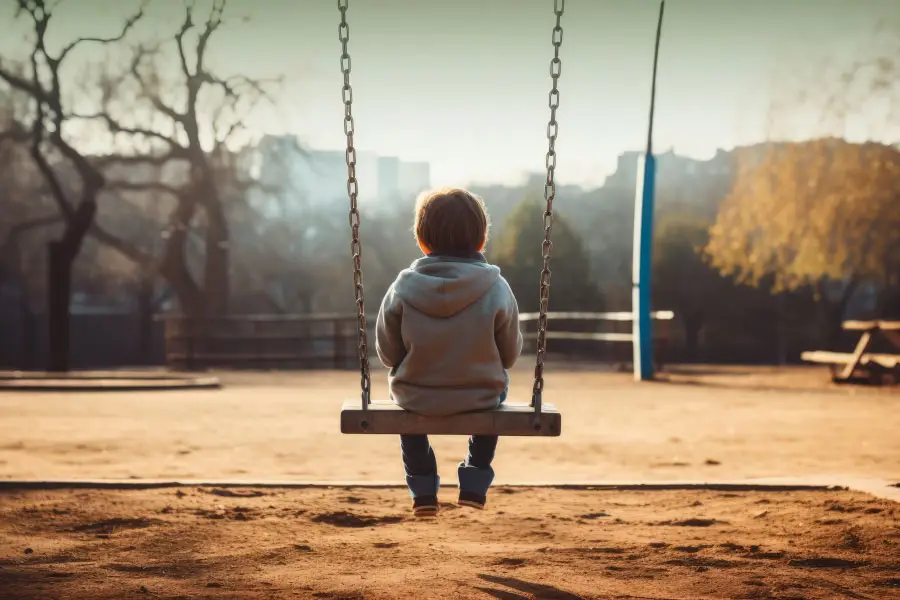
People expect me to feel guilty, and I understand why. Almost every boy I grew up with in that orphanage is either dead, has done significant prison time, or is living a life that never found its footing. I know their names, I remember their faces, and I think about them more than most people would expect.
When I think about them I feel sadness, deep, specific sadness for specific people. What I do not feel is guilt. The difference between those two things matters more than it might seem, and I want to try to say it clearly, because I don’t think it gets talked about honestly very often, not by people who grew up in the system, and not by the people who work with kids still inside it.

We Were Not Friends
In the orphanage, we were not friends in the way most people understand that word. We were co-survivors. We shared a building, a dining hall, a set of disadvantages that none of us wanted, and some of those boys had it harder than I did in ways I knew about and probably in ways I never fully understood.
They also beat me almost every day through eighth grade, not because I had done anything particular, but because I was there and I was smaller and that was how things worked in that place. It didn’t stop until I got angry enough to fight back hard enough that getting to me wasn’t worth what it cost them. After that, they mostly left me alone.
I’m not telling that story to suggest I had things figured out, because I didn’t. I drank and smoked and made choices through that same period that I’m not proud of. The anger that came with my childhood didn’t disappear just because I decided it shouldn’t ruin my life, and that decision and those feelings ran on separate tracks for a long time. What I’m saying is that we started from essentially the same place, the same building, the same system, and the same wounds stacked on top of each other from the beginning, but we ended up in very different places. That gap is what people assume I should feel guilty about.
What the Anger Does
Here’s what I observed in the boys who didn’t find a way through, and what I know from the inside about why it happens. The anger that comes from growing up invisible, from being raised by the system instead of a family. That kind of anger is not irrational. It makes complete sense given what these kids have been through. The problem is what it does when it has nowhere to go and no one helps you find a way to work with it.
Some boys turned it inward and shut down entirely. They emotionally flatlined, stopped talking, stopped hoping, stopped imagining any future worth wanting. I’ve written about that elsewhere because I lived it myself for a period. Others turned it outward, into fights, into stealing, into destruction, into whatever would make someone finally pay attention, even if the attention was punishment. Both responses are survival mechanisms that make sense, and both, if they go unaddressed long enough, start to close off the paths that might have led somewhere different.
What I watched happen with the boys who ended up dead or in prison is that anger became the organizing principle of their lives. Not because they were bad people, but because nobody helped them find a vision for their lives that was bigger than the rage, and eventually they stopped looking for one. They couldn’t find a way out of their anger, and they wouldn’t let the caring adults and the faith that might have helped them get there do that work. I say that without condescension. I know how hard it is to let anyone in when your entire experience has taught you that letting people in is how you get hurt.
But there is a point, and I believe this, where the choice becomes yours. It’s not one you can make without help, but it’s yours. Some of those boys never got there, or got there and turned away from it, and I can’t fully account for why.
Sadness Is Not the Same as Guilt
Guilt implies responsibility. It implies that something in my hands could have changed their outcome, that what happened to them was somehow connected to what happened to me, that my finding a way through came at their expense. The path out was not a limited resource. I didn’t take the last seat and leave them standing.
What I had, underneath all the rage and the bad decisions and the years it took to find any clarity, was a conviction that my circumstances were not my sentence, that the story being written about me was not the whole story. I found that through faith and stubbornness and a handful of adults who treated me as someone worth investing in. Some of the boys I grew up with found their way to something like that conviction too, and they built something. Others didn’t, for reasons that belonged to them and that I cannot fully know. What I can say is that the difference was internal, something that each person either moves toward or doesn’t, in their own time and for their own reasons.
Performing guilt as a kind of tribute to the ones who didn’t make it wouldn’t honor them. It would just make my life smaller without improving theirs.

The Difference Between Grief and Guilt in Practice
Grief and guilt feel similar from the inside, especially when the loss is genuine and the people involved are people you care about, but they function very differently over time. Grief stays open. It can sit alongside hope, alongside presence, alongside continuing to show up for the people in front of you. Guilt tends to collapse inward. It becomes about managing the weight of it rather than doing anything useful with it. For foster parents and adoptive parents and everyone else working with kids who came from hard places, that collapse can quietly take something from the child in your care, even as you’re trying to give everything you have.
I grieve the boys I grew up with. I grieve that the system they were in, the one I was also in, didn’t give most of us what we needed to find our way through the anger. I grieve that so many kids in similar situations right now are getting the same insufficient hand. That grief is honest and I don’t try to talk myself out of it.
But I am not guilty for surviving it, and I don’t think you should be either.
What Personal Responsibility Does and Doesn’t Mean
This kind of argument gets used in ways that are neither honest nor fair, and I want to say what I mean precisely.
Saying that the boys I grew up with made choices, or chose not to make choices, is not the same as saying the system treated them well. It didn’t. It didn’t treat any of us particularly well. It kept us alive and functional and not much else. The bar was to graduate high school and not go to jail, and for a lot of kids, even that was too high, given what they were carrying and what they lacked.
It is also not the same as saying that circumstances don’t shape outcomes. They do, significantly. A child who grows up invisible, who has never been told the ceiling is higher than what they can see, who has absorbed years of evidence that they are not worth staying for, that child is working against something substantial. The deck is stacked, and pretending otherwise is dishonest.
What I’m saying is something more specific. Inside those circumstances, there is still a point where a person’s own response to their situation begins to matter. The question shifts from what was done to you to what you’re going to do with it. That shift is not easy, and it doesn’t happen without help, and not everyone gets the help they need at the moment they need it. I know that from the inside.
But I also know that I am not the only person who came out of that orphanage and found a different way, and I am not able to look at the ones who didn’t and conclude that the difference was entirely out of their hands.
For the People Raising These Kids
If you’re a foster parent or an adoptive parent, you probably recognize some version of this weight. A child in your home has a sibling still in the system, or a birth parent whose situation keeps deteriorating, or connections to other kids whose futures look uncertain. The sadness of that is appropriate. It belongs there, and I don’t think you should try to argue yourself out of it.
But guilt over what you cannot fix tends to organize a person around compensation rather than presence. You give more, try harder, brace for a ledger that never quite balances, and the child in front of you, the one you actually have access to, sometimes ends up with the version of you that’s worn down from trying to fix everything that sits beyond your reach.
Kids from the system learned early how to read adults. They will know the difference between someone who is present and someone who is carrying something that has nothing to do with them. You don’t have to have it all resolved. You just have to be there, actually there, without the weight of what you couldn’t fix pulling you somewhere else.
The boys I grew up with made choices shaped by pain that none of us chose, and I couldn’t own their outcomes then any more than I can now. What I could do was make my own choices, in the same direction, for long enough that something different became possible. Grieve what belongs to grief, and bring the rest of yourself to the person in front of you. That is what they actually need from you.
In Hope.