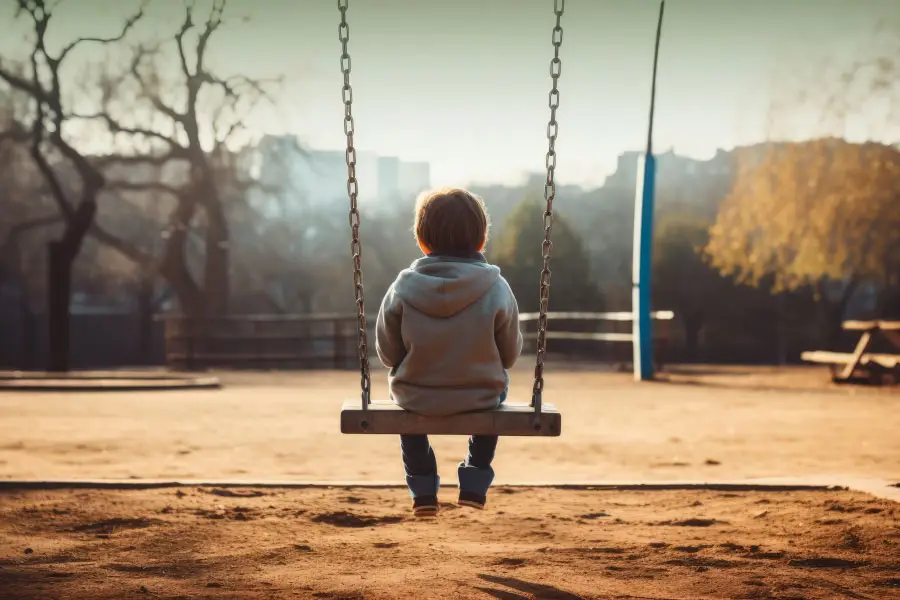
When I was a kid living in an orphanage, there were always people around. Sixty-four kids in that building, staff moving through the halls, and meals served to a full dining room every night. By any external measure, I was never alone, and yet I grew up in one of the more profound experiences of loneliness I’ve ever encountered in anyone, including people who have lived physically isolated lives.
The loneliness of the orphanage was not the absence of bodies. It was the absence of connection, which is a different thing entirely, and if you want to understand what that kind of childhood does to a person’s ability to form relationships later on, that difference is where you have to start.
What We Learned About Other People Early
In the dorm, we had an unspoken rule among the boys. You did not bother learning a new kid’s name until he had been there at least two or three weeks. Not because we were unkind, or not only because of that, but because children are practical, and the practical reality of that place was that a kid could come and go in a single day. Sometimes a family would arrive, spend a few hours, and take someone home, and other times a placement fell through and a child came back within the week. Sometimes a kid was there Monday and gone by Wednesday and you never found out why. We figured, why invest in learning someone’s name if they might not be there next week?
That is how you learn, before you have the language to describe what you’re learning, that attachment is a liability, that investing in another person is a transaction with a very uncertain return, and that the safest position is to hold back until you have some evidence the investment is valuable. Two weeks was our threshold. If a kid was still there after two weeks, you learned his name. Until then, he was just another kid.
I didn’t understand what that was doing to me at the time. I understood it as practical, and it was practical. It was also the beginning of a way of relating to other people that I would carry into adulthood and spend years slowly unlearning.
What the Bullying Added
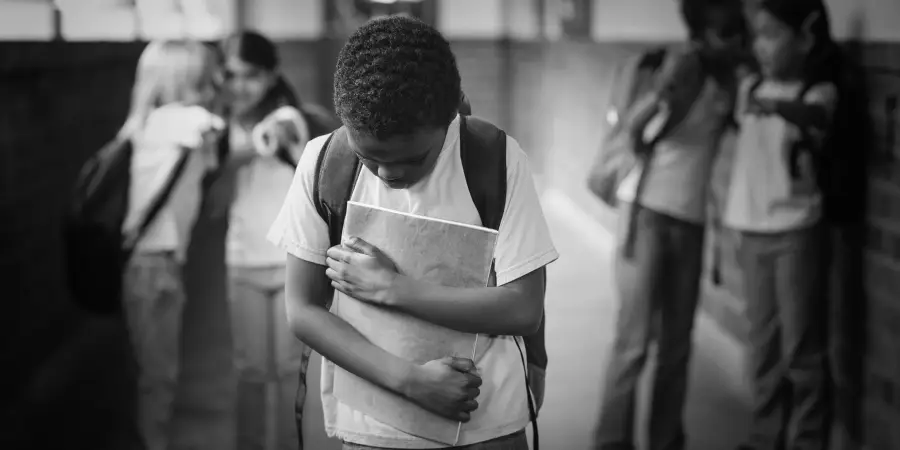
Beyond the detachment, something more actively damaging was happening. The older boys in the dorm used the smaller ones to manage their own pain, and I was on the receiving end of that dynamic from the time I was old enough to be a target until ninth grade, when I got angry enough to fight back hard enough that getting to me wasn’t something they wanted to keep doing. Nothing changed in them, I just made it too costly.
What that adds to an already isolated childhood is a specific lesson about closeness: that the people around you are not safe. Proximity is not the same as protection, and in fact, proximity to the wrong people is its own kind of danger. So not only had I learned not to get attached to newcomers, I had also learned that the people who were already there might hurt me. That combination left very little space for anything that looked like a genuine connection.
I was not unusual in this. Every kid in that place was working with some version of the same calculus. We were not a community in any meaningful sense. We were a collection of people who happened to share a building, a dining hall, and a set of circumstances none of us had chosen. Some of the boys I grew up with would eventually be in my orbit for years, and I knew their faces and their histories, but that is a long way from knowing a person, and an especially long way from trusting one.
The Unseen Cost of This
Here is what I did not understand until long after I had left that building: the habits of protection you build in an environment like that do not automatically switch off when the environment changes.
I walked out of the orphanage at seventeen into a world that, in theory, operated by different rules. People could be trusted more, relationships could hold, and the person in front of you was not necessarily going to disappear or hurt you. But I did not know those things the way I knew the other things. I had spent fourteen years learning a set of lessons about what other people do, and those lessons did not revise themselves just because I had crossed a threshold into a different chapter of my life.
What I carried with me was an emotional isolation that didn’t look like isolation from the outside. I could be in a room full of people, engaging, functioning, performing well in social situations, and still feel the specific loneliness of someone who doesn’t fully trust that any of it will hold. You learn to be present without being accessible, and how to stand in a crowd without being in it in a way that would require you to be vulnerable to it.
I had learned to keep people at a managed distance, to engage enough to function but to protect the core of myself from anything that could constitute genuine dependence on another person. I didn’t have a name for that at the time. What I did have was a set of behaviors that made complete sense given where they came from, and that caused me problems in relationships for years before I understood what I was doing and why.
What Feeling Invisible Does Over Time
There is an invisibility that comes from being seen and ignored. In the orphanage, the people in town knew who we were, but they just didn’t engage with us in any way that closed the distance. I think I understand why. If you get to know the kid, you start to feel something for the kid, and then you have to decide whether you’re going to do anything about it. Most people would rather not have to make that decision, so they kept us at arm’s length and we remained vaguely familiar faces rather than people with names and histories.
That is a particular kind of invisible. You exist, you are seen to exist, and the people seeing you have decided the cost of knowing you is more than they want to pay. A child absorbs that as information about their own value, the same way a child absorbs a limiting belief about their potential. It doesn’t feel like other people’s failure. It feels like evidence about you.
What I grew up believing, underneath everything else, was that I was not someone people chose to get close to. I couldn’t have said that clearly at the time. It was just how things were, a conclusion I had reached without knowing I’d reached it, and I was living by it long after I’d left that building without realizing I still was.
How This Gets Carried Into Adult Relationships
The relationship that tested this most directly was my marriage. My wife knew I grew up in an orphanage, and she chose me anyway, which was itself something I had not fully expected. But choosing someone and actually being known by them are different things, and for a long time I was better at the first than I was at allowing the second.
The miscommunications in our early marriage were not only about different expectations or different backgrounds, though they were certainly that too. Some of them were about the fact that I had learned to be emotionally self-sufficient in a way that didn’t leave obvious room for another person. I had survived by not needing people, or by learning to keep the need small enough that disappointment couldn’t take me out. That is a workable survival strategy in an orphanage, but it is a problem in a marriage where the whole point is to not need protection from the other person.
Learning to be really known by someone, to let them get past the managed surface and into the parts that were less organized, took a long time and involved making mistakes I didn’t always understand at the time. My wife was patient with me in ways I didn’t always deserve. What eventually helped was less a single insight than the slow, repeated proof that she was not going anywhere.
That evidence took years to accumulate. The attachment patterns learned over fourteen years do not revise in months, but they do revise, and that is the thing I want to say plainly, because I think people who grew up in similar conditions sometimes assume that the way they relate to people is fixed, that the emotional isolation is permanent, that they are simply people who don’t connect easily and that is that.
It is not that. It is learned behavior, which means it can, with enough intention and enough evidence to the contrary, be unlearned. Not quickly, and not without cost, but it can be done.
What I Would Say to Someone Carrying This
If you grew up in a way that taught you to keep people at a distance, showing you that attachment was a liability and closeness a risk, here is what nobody told me and what I wish they had told me.
The lessons made sense where you learned them, and they were the right lessons for that environment. The problem is not that you learned them; the problem is that you are now in different environments, with different people, and the old lessons are being applied where they no longer fit.
Emotional isolation protects you from the loss of connection, but it also prevents you from having it in the first place. The two things are not separable. You cannot protect yourself from the risk of being left and also have the experience of being truly known by someone. Those are mutually exclusive positions, and at some point, the question becomes which loss you can live with more easily.
I spent a long time choosing the protection. I don’t regret that entirely, because some of that protection was what got me through years that required getting through, but I am glad I eventually let some of it go, and I am glad I married someone who understood, better than I did at the time, that patience was going to be required.
The orphanage taught me that connection was uncertain and people were temporary. Forty-five years of marriage has taught me another thing: both are true, and the second one took longer to learn because the first one got there first.
In Hope.